Dispatches from the Void: The Notifications That Arrive After Everything Has Ended
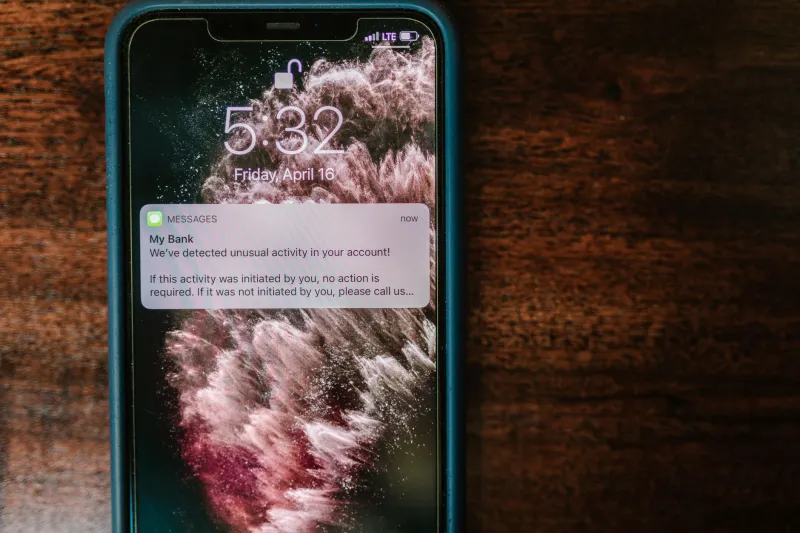
There is a particular unease that accompanies the ping of a phone at midnight—not because of what the message contains, but because of who sent it. Imagine opening your screen to find a push notification from an application you deleted two years ago, referencing an account you formally closed, addressing you by a username you no longer use. The sender, by every measurable definition, does not exist. And yet the message arrived.
This is not a rare occurrence. It is, by most accounts, a quietly spreading one.
The Anatomy of a Ghost Signal
To understand why deleted accounts continue to generate communications, it helps to understand the architecture beneath them. When a user requests account deletion, they are initiating a process that most platforms describe as thorough and final. Privacy policies invoke language of permanence: data is "removed," accounts are "terminated," associations are "severed." The vocabulary is conclusive.
The technical reality is considerably more fragmented.
Modern notification infrastructure is rarely housed within a single system. Push alerts, promotional emails, transactional messages, and behavioral triggers are typically managed through third-party services—companies like SendGrid, Braze, or OneSignal—that operate on their own data schedules, their own retention timelines, and their own definitions of what constitutes an "active" record. When a primary platform deletes an account, it does not always cascade that deletion through every integrated service in real time. Queued messages may already be staged for delivery. Scheduled campaigns may reference user identifiers that have not yet been purged from the vendor's own database.
The result is a notification that travels outward from infrastructure that no longer recognizes its own origin.
Intentional Latency and the Re-engagement Economy
Not all phantom notifications are accidents. A meaningful portion of them are, in the bluntest terms, deliberate.
The re-engagement email is a well-documented practice in digital marketing. Platforms that detect declining user activity—or that register a deletion request but have not yet fully processed it—will frequently trigger a final sequence of outreach. These messages are designed to interrupt departure. They arrive with subject lines calibrated to provoke curiosity or nostalgia: We miss you. Here's what you've been missing. Your account is still waiting.
The ethical ambiguity here is significant. A user who has submitted a deletion request has expressed, in the clearest possible terms, a desire to disengage. The decision to send re-engagement communications during the processing window—which can legally extend up to 30 days under California's CCPA framework, and even longer under less regulated conditions—treats that expressed intention as negotiable. The deletion request becomes, in practice, a soft opt-out rather than a termination.
Some platforms go further. Internal documentation from several major US-based apps, surfaced through regulatory investigations and whistleblower accounts over the past few years, has suggested that notification systems are sometimes deliberately decoupled from account status flags. The reasoning, where it has been articulated, centers on pipeline stability: altering live notification queues mid-cycle introduces engineering complexity. It is, in the language of product development, easier to let the sequence complete.
Easier for the company. Stranger, and more unsettling, for the person on the receiving end.
What the Message Reveals About the Messenger
There is an interpretive dimension to phantom notifications that extends beyond the technical. When a service continues to contact a user after deletion, it communicates something about its underlying relationship to consent. The notification becomes a kind of inadvertent confession—evidence that the platform's model of the user persists independently of the user's own choices.
This is not a trivial distinction. The difference between a system that responds to user action and a system that merely processes it is the difference between genuine autonomy and the performance of it. Phantom notifications are, in this sense, a transparency mechanism that companies did not intend to provide.
For users who have invested effort in curating a minimal digital footprint—those who delete accounts precisely because they do not wish to be catalogued, tracked, or addressed—these messages arrive with a particular weight. They are not merely inconvenient. They are a reminder that the architecture of the modern internet was not designed with departure in mind.
The Regulatory Landscape and Its Limits
Under the CAN-SPAM Act, commercial email must include functional unsubscribe mechanisms. Under CCPA, California residents retain the right to request deletion of personal data. The CPRA, which expanded those protections in 2023, added further obligations around sensitive data categories. These frameworks exist, and they carry genuine enforcement potential.
They do not, however, address the structural conditions that produce phantom notifications in the first place. Compliance is measured at the level of policy documentation and opt-out functionality, not at the level of pipeline behavior. A company can be fully compliant on paper while its notification infrastructure continues to fire messages from addresses it has nominally purged.
The Federal Trade Commission has shown increased interest in data retention practices, and several enforcement actions in recent years have specifically cited gaps between stated deletion policies and actual data handling. But the pace of regulatory attention has not matched the pace of infrastructure complexity. The ghost signals continue to travel faster than the rules designed to stop them.
Reading the Silence Between Alerts
There is a particular kind of user who pays close attention to phantom notifications—not out of anxiety, but out of a methodical curiosity about what they reveal. Forums dedicated to privacy practice, digital minimalism, and data rights have accumulated detailed documentation of these incidents: timestamped screenshots, headers parsed for routing information, accounts traced back to third-party vendors through careful investigation.
This community has developed a working taxonomy. There are pipeline ghosts—notifications that were queued before deletion and simply completed their journey. There are vendor echoes—messages originating from integrated services that were never informed of the account's termination. And there are retention pings—deliberate re-engagement attempts sent during the deletion processing window, sometimes indistinguishable from the accidental variety.
Each category tells a different story about the company that produced it, and each requires a different kind of response.
The Outbox That Doesn't Know It's Empty
What makes phantom notifications genuinely strange—what places them in a category distinct from ordinary spam or even ordinary corporate overreach—is their quality of temporal dislocation. They arrive from a version of the user that no longer exists, referencing a relationship that has been formally ended, carrying the syntax of continuity into a space where continuity has been deliberately refused.
They are, in a precise sense, messages from the void. Not metaphorically. The account that sent them is gone. The infrastructure that generated them does not know that. The gap between those two facts is where the notification lives—suspended in transit, arriving at a destination that has moved on without it.
For anyone paying attention, that gap is worth examining. It is one of the more honest windows into how digital systems actually process the concept of ending—and how rarely that concept, in practice, means what users are told it means.