The Invisible Archive: Why Some Creators Are Choosing Darkness Over Discovery
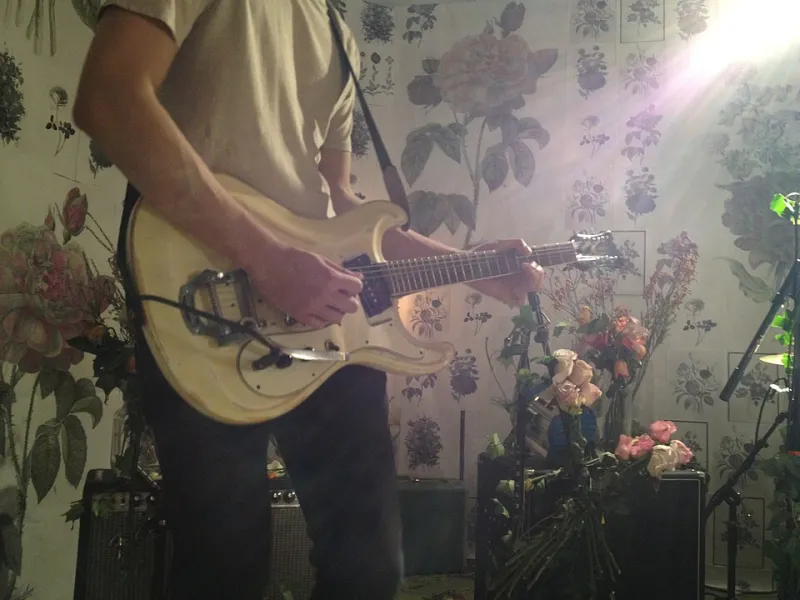
Photo: Incase, CC BY 2.0, via Wikimedia Commons
Somewhere on the internet, an album exists that was released with no announcement. It was uploaded to a platform most people have never heard of, assigned a file name that communicates nothing, and shared once—in a private forum, to approximately forty people. It has not been reviewed. It has not been streamed. By every conventional metric, it has not succeeded. By the logic of its creator, it has done exactly what it was designed to do.
This is not an isolated case. Across music, visual art, fiction, and interactive media, a distinct and quietly expanding cohort of creators is making a considered decision to resist the primary directive of the contemporary digital landscape: be found. Their reasons are varied, their methods diverse, and their implications for the relationship between art and audience worth examining with some care.
The Attention Economy as Creative Constraint
To understand why some creators are withdrawing from visibility, it helps to understand what full participation in the attention economy actually requires. Optimization for discovery on major platforms—whether Spotify, Instagram, YouTube, or the dominant literary platforms—demands a particular kind of creator behavior. Consistency of output. Legible branding. Algorithmic fluency. Engagement with audience feedback in ways that subtly, and sometimes not so subtly, shape the work itself.
For many creators, this is an acceptable trade. Reach is a legitimate goal, and the tools available to achieve it are more sophisticated than they have ever been. But for others, the requirements of visibility have come to feel like a creative constraint rather than a neutral condition. The work changes when it is made for discovery. It orients itself toward an imagined algorithm before it orients itself toward an imagined audience. And it often loses something in that reorientation—something difficult to name but recognizable in its absence.
Obscurity, in this context, is not a retreat. It is a refusal of a specific set of conditions.
Methods of Strategic Withdrawal
The creators who have chosen this path employ a range of techniques, some technical and some conceptual. Pseudonymity is among the most common: using a name that is functionally unconnected to any existing identity, without the promotional apparatus that typically accompanies a creative persona. Unlike the pseudonym as brand—a stage name designed to be remembered—the pseudonym as disappearance is chosen precisely because it does not invite accumulation.
Distribution limitations are another mechanism. Some musicians release work exclusively on physical formats in small runs, or through mailing lists that require direct contact to join. Some writers publish only in print journals with limited circulation, declining digital reproduction. Visual artists have been known to release work exclusively through private image-hosting services, or to share it only in encrypted channels. The effect in each case is the same: the work exists, but finding it requires something more than a search query.
There are also creators who use the architecture of the internet itself as a concealment strategy. Files hosted on servers that are never indexed. HTML pages with no inbound links. Audio embedded in formats that streaming algorithms cannot parse. These are not technical oversights. They are deliberate design choices made by people who understand the systems they are evading.
The Question of Audience
A reasonable objection presents itself: if work is made with no intention of being found, does it have an audience? And if it has no audience, in what sense is it functioning as creative work rather than as private practice?
The objection is worth taking seriously, but it rests on a conflation of audience with scale. The creators operating in deliberate obscurity are not, by and large, making work for no one. They are making work for small, specific, and often self-selecting audiences—people who encountered the work through personal recommendation, who stumbled across it through genuine curiosity, or who were already part of the communities where the work circulates. The audience is real. It is simply not large, and it was never intended to be.
There is a case to be made that this selectivity produces a qualitatively different kind of reception. When an audience member has made a genuine effort to locate a piece of work—followed a chain of references, navigated an unfamiliar platform, requested access through an intermediary—they arrive at the work differently than a listener who received it as a recommendation. The attention is different. The relationship to the material is different. Whether that difference constitutes a superior mode of reception is a matter of perspective, but it is a distinct one.
Obscurity as Aesthetic Position
Beyond strategy and audience, there is a more fundamental claim being made by some of the creators in this space: that obscurity is itself an aesthetic position, not merely a condition of distribution. The inaccessibility of the work is part of the work. The difficulty of finding it is an element of its meaning.
This is not an entirely new idea. The history of art contains numerous examples of work designed to resist easy consumption—from the deliberate difficulty of certain modernist literature to the site-specificity of land art that cannot be reproduced in a gallery. What is new is the context: a digital environment in which visibility has been so thoroughly instrumentalized that its absence carries genuine charge. To choose not to be found, in 2024, is to make a statement about what finding is worth.
For audiences willing to do the seeking, the reward is not merely the work itself. It is the experience of having encountered something that was not waiting to be encountered—something that required effort, and that has not been flattened by the process of being widely seen.
In the voidframe of the contemporary internet, where everything loads quietly and some things do not load at all, the invisible archive may be the most honest address available.