Portals in the Wreckage: What Broken Links Leave Behind

There is a particular kind of vertigo that arrives when a link you trusted deposits you somewhere you did not expect. The page loads — quietly, without apology — and what appears bears no relationship to what was promised. You did not find what you were looking for. You found something else entirely.
This is the experience at the center of an understated but growing phenomenon: the accidental art installation produced by the death of a URL.
The Anatomy of a Dead Link
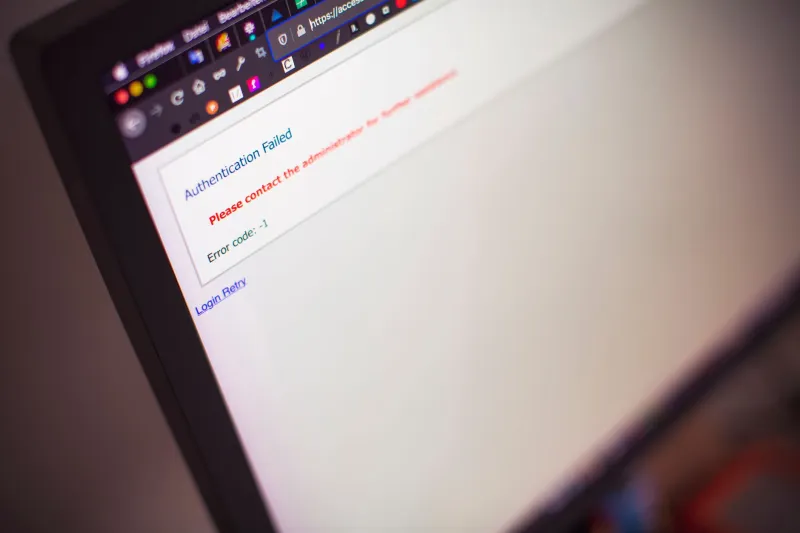
In technical terms, a broken redirect is a failure of infrastructure. A domain expires, a server configuration lapses, or a CMS migration leaves behind a trail of orphaned paths. The result is predictable: a user clicks, a request is sent, and the expected destination no longer exists. What the user encounters instead — whether a blank white field, a domain parking page, a 404 message of someone else's design, or a completely unrelated website that has since claimed the address — is, by most conventional measures, an error.
But errors, as students of the internet's stranger territories have long understood, carry their own information. They communicate absence, transition, and sometimes an almost architectural sense of what once stood in a given location. A domain parking page for what was once a beloved regional music blog tells a story. So does the generic hosting placeholder squatting on the address of a defunct small-press literary journal. The failure is legible. And legibility, in the right hands, becomes meaning.
When Failure Becomes a Feature
Certain communities — particularly those drawn to the internet's more unconventional edges — have begun treating broken redirect chains as navigational art. The practice is not organized in any formal sense. There are no curators, no press releases, no gallery openings. Instead, there is a loose and largely anonymous network of users who deliberately follow dead links, document what they encounter, and share those encounters in spaces that themselves tend toward the marginal and the unindexed.
What these explorers report is difficult to categorize. Some expired domains resolve to pages that appear to have been designed in direct response to their own abandonment — sparse text, a single image, no navigation. Whether these pages were deliberately constructed or are simply the residue of a hosting service's default template is often impossible to determine. That ambiguity is, for many, the point.
Others describe redirect chains that pass through three or four intermediate addresses before resolving — each hop a different aesthetic register, a different decade of web design, a different apparent intention — before finally landing somewhere that feels, against all logic, like a destination.
The 404 as Statement
The 404 error page occupies a peculiar position in this landscape. Originally a server response code indicating that a requested resource could not be located, the 404 page has evolved, in the hands of certain developers and designers, into a medium in its own right. Some organizations treat their error pages as opportunities for humor or brand reinforcement. Others — and these are the ones that tend to circulate among Voidframe's readership — treat them as something closer to a philosophical position.
A 404 page that offers no explanation, no navigation, no path forward: this is a statement about finality. A 404 page that loads an audio file, or displays a single sentence that seems addressed to no one in particular, or that redirects after thirty seconds to a page that is itself a 404: these are experiences that resist easy categorization. They are not quite art, not quite error, not quite communication. They occupy the space between those categories, which is precisely where the most interesting things tend to live.
Domain Squatting as Unintentional Curation
The domain aftermarket adds another layer of complexity to this conversation. When a domain expires, it frequently enters a holding period before becoming available for purchase. During that window, and often long after, the address may resolve to a parking page — a generic placeholder operated by a registrar or an advertising network, populated with links that bear some algorithmic relationship to the domain's previous content.
The result is frequently surreal. A domain once associated with a handmade ceramics studio in Vermont might, after expiration, serve ads for industrial dishwashers and vacation rentals in destinations the original owner never mentioned. The algorithmic logic is sound; the experiential result is something closer to a found poem. The machine has attempted to reconstruct a context it cannot fully access, and the reconstruction is stranger and more evocative than anything that was planned.
For users who encounter these pages without knowing what came before, they function as pure present-tense experience. For those who remember the original site, they function as a kind of elegy — one written by a system that does not understand loss.
The Ethics of Inhabiting Someone Else's Wreckage
It would be incomplete to examine this phenomenon without acknowledging its more uncomfortable dimensions. The broken links and expired domains that generate these accidental experiences were, in most cases, once someone's project, investment, or creative output. The ceramics studio that let its domain lapse may have done so under circumstances that were anything but aesthetic. Financial difficulty, illness, the ordinary exhaustion of maintaining a small business: these are the forces that most commonly produce digital abandonment.
To treat the residue of that abandonment as art — even privately, even without publication — requires a certain willingness to extract beauty from someone else's difficulty. This is not a new tension. It is present in urban exploration, in the photography of industrial ruins, in the entire tradition of finding the picturesque in the discarded. The internet simply provides a version of that tension that is frictionless, consequence-free, and available from any device.
The question of whether that frictionlessness changes the ethics is one this publication does not presume to answer definitively. It is, however, a question worth holding.
What the Void Preserves
There is a final observation worth making, and it concerns memory. The broken redirect, the expired domain, the 404 that resolves to something unexpected: each of these is, among other things, a record. Not a complete record, not an intentional one, but a record nonetheless. The domain parking page that lists categories related to a defunct community forum tells us something about what that forum discussed. The redirect chain that passes through three abandoned addresses tells us something about the sequence of hands through which a digital space passed.
The internet was not designed to preserve these traces. It was designed to route around failure, to resolve errors, to move forward. That it nonetheless accumulates them — that broken links persist, that expired domains leave impressions, that 404 pages accumulate their own quiet histories — is a function of scale and inertia rather than intention.
But intention, as the users who navigate these spaces understand, is not always the most interesting variable. Sometimes what loads in the absence of intention is more worth examining than anything that was planned.