The Productive Emptiness: How Sparse Digital Spaces Are Quietly Reshaping Creative Practice

There is a particular kind of fatigue that does not announce itself. It accumulates in the peripheral vision — in the suggested post that appears before the one you chose to read, in the notification that interrupts the thought you had not yet finished forming. For a measurable number of working creatives across the United States, this fatigue has become the central condition of digital life, and their response to it has been neither protest nor abstinence. It has been migration.
They are moving toward sparse ground.
When the Feed Becomes the Obstacle
The architecture of dominant social platforms was not designed with the creative process in mind. It was designed for retention — for the sustained occupation of attention across the longest possible interval. The infinite scroll, the autoplay queue, the algorithmically curated discovery feed: each of these mechanisms operates on the assumption that the user's primary desire is continued consumption.
For artists, writers, and designers, this assumption tends to conflict directly with the requirements of their work. Creation demands intervals of sustained, undivided focus. It requires the kind of cognitive stillness that algorithmic environments are structurally incapable of providing, because stillness does not serve the engagement metrics that sustain those environments commercially.
The result is a population of creatives who have found themselves working against the very platforms they depend on for visibility — spending increasing portions of their productive hours managing a stream of content that was never theirs to begin with.
The Austere Alternative
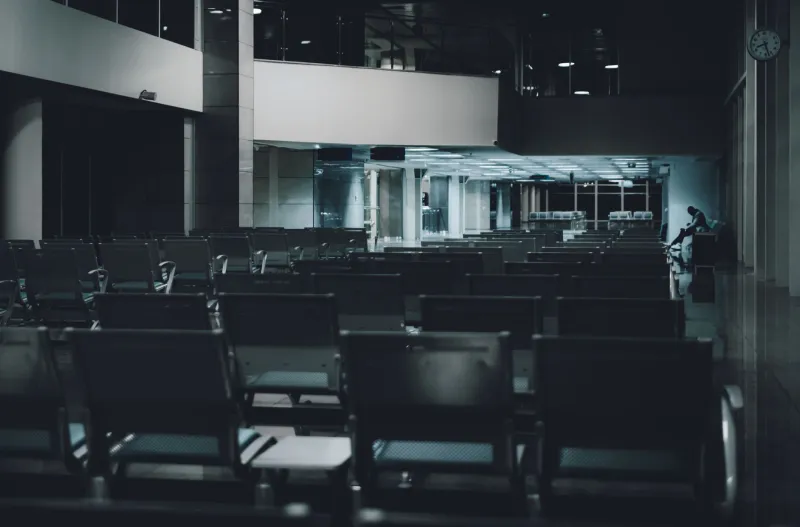
What has emerged in response is a loose but discernible movement toward digital spaces that operate on opposing principles. These are environments characterized by minimal visual load, limited interactive affordance, and a near-total absence of recommendation infrastructure. They do not suggest. They do not autoplay. They do not populate your peripheral field with content you did not request.
Some of these spaces are purpose-built: single-page portfolio sites stripped to typography and a contact form, private wikis maintained by small literary collectives, text-only forums modeled on early internet infrastructure. Others are repurposed tools — plain-text editors used as publishing environments, RSS aggregators configured to display only what was explicitly subscribed to, email newsletters exchanged within closed circles of a dozen recipients.
What unites them is not their format but their philosophy. They are built around the premise that the user's attention is a resource to be conserved rather than harvested.
The Psychology of Visual Quiet
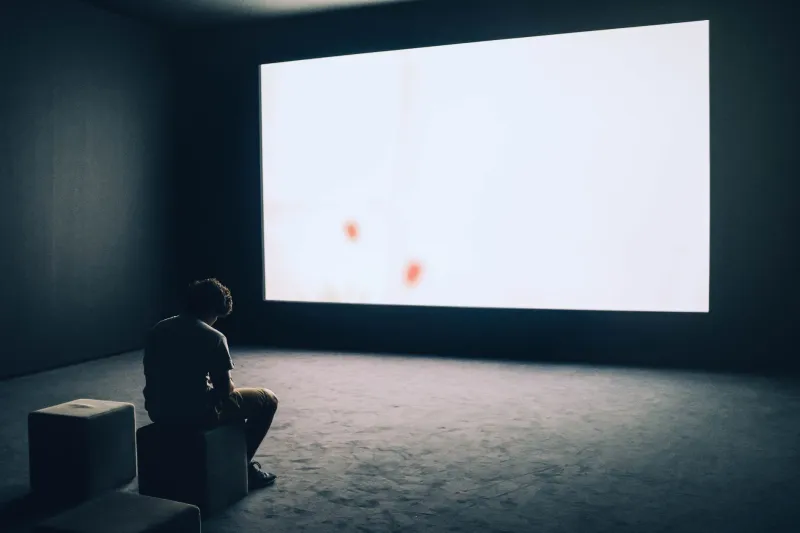
Research in cognitive load theory offers a partial explanation for why sparse environments tend to support creative output. When the visual and informational demands placed on working memory are reduced, the cognitive resources available for generative thinking increase correspondingly. In practical terms, a blank or near-blank screen does not merely fail to distract — it actively creates the conditions under which original thought becomes more accessible.
But the creatives who have made this migration tend to describe the experience in less clinical terms. A Brooklyn-based illustrator who relocated her primary working environment to a self-hosted, image-only site with no comment functionality described the shift as "recovering a room I didn't know I'd lost." A novelist based in Portland, Oregon, who now distributes work exclusively through a plain-text email list, characterized mainstream platforms as "spaces that were always slightly louder than my own thinking."
The consistency of this language across different disciplines and geographies is worth noting. The metaphors are spatial and acoustic rather than technological. These are not complaints about features or policies. They are descriptions of an environment that had become incompatible with a particular kind of interior life.
Legibility on Their Own Terms
One of the more counterintuitive aspects of this movement is its relationship to audience. Conventional digital wisdom holds that visibility requires participation in high-traffic platforms — that the creator who abandons the feed abandons their reach. The experience of those who have made the transition suggests a more complicated picture.
Several creators report that their most engaged audiences followed them into the quieter spaces, and that the quality of interaction improved substantially once the ambient noise of algorithmic mediation was removed. A graphic designer in Chicago who shuttered her Instagram presence in favor of a minimal personal site noted that her inquiry volume decreased but her project conversion rate increased — a trade she described as one she would have made sooner had she understood it was available.
The sparse environment, it turns out, functions as a form of filtering. The user who navigates to a site with no scroll, no feed, and no suggested content has made an active choice. The passivity that defines algorithmic consumption is absent. What remains is an audience that arrived with intention.
The Void as Creative Infrastructure
There is something worth examining in the specific quality of emptiness these spaces offer. It is not the emptiness of absence or failure — not the blank page as threat. It is, rather, a structured emptiness: a container whose value is defined precisely by what it refuses to contain.
This distinction matters because it reframes the sparse digital environment not as a deprivation but as a design decision with creative consequences. The void is not what is left when features are removed. It is what becomes possible when they are.
For the creatives who have settled into these quieter corners of the digital landscape, the minimalism is not aesthetic posturing. It is functional infrastructure — the digital equivalent of a studio with no windows facing the street, where the work that requires genuine solitude can finally proceed without interruption.
What the Mainstream Cannot Offer
It would be a misreading to frame this migration as rejection for its own sake. The creatives involved are not, by and large, making an ideological argument against visibility or scale. They are making a practical argument about the conditions under which their particular kind of work becomes possible.
Mainstream platforms offer reach, community, and a degree of discoverability that sparse alternatives cannot replicate. What they cannot offer is the specific cognitive environment that sustained creative production requires. For the growing number of artists, writers, and designers who have concluded that this trade is not worth making, the austere alternative is not a retreat. It is a return — to attention, to intention, and to the kind of work that only becomes visible once the feed goes quiet.